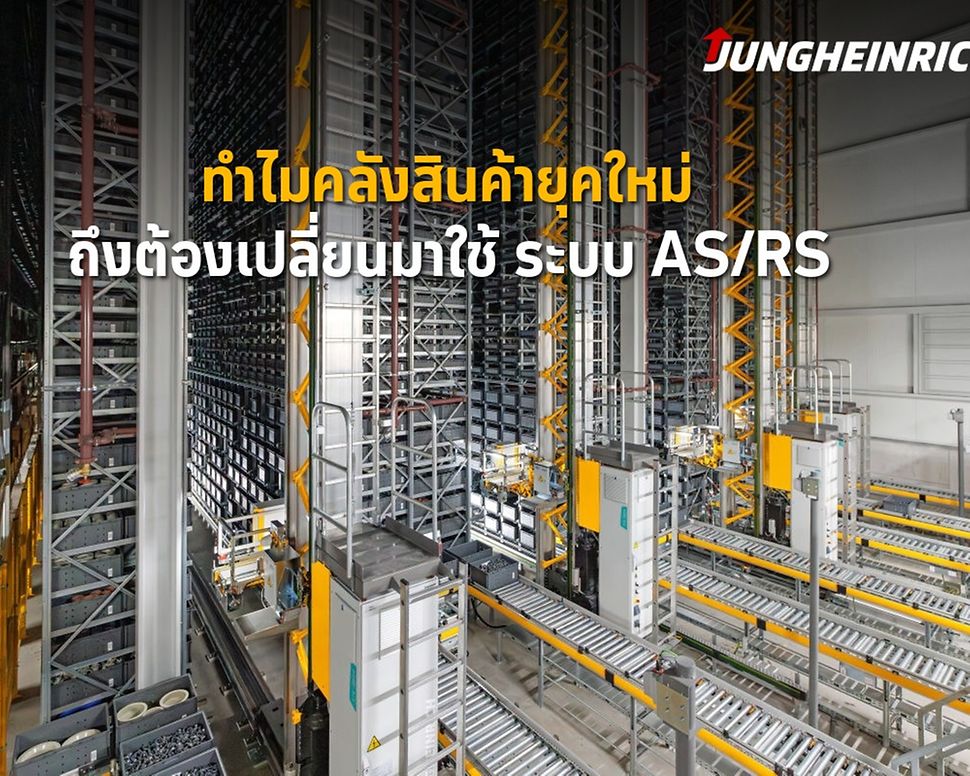
Why Modern Warehouses Are Switching to AS/RS Systems
In an era demanding speed and accuracy, traditional warehouse management is no longer enough. AS/RS systems transform warehouses into Smart Factories—maximizing space, streamlining inventory, reducing errors, and boosting competitiveness.
What is an AS/RS System?
An AS/RS (Automated Storage and Retrieval System) is a warehouse management technology designed for automated goods storage and retrieval. Controlled via computer software, the system works in conjunction with infrastructure such as pallet racking and automated lifting equipment. It reduces manual labor in moving and locating inventory, allowing warehouses to operate systematically, accurately, and rapidly to meet the demands of modern businesses seeking to elevate their inventory management standards.
How Does an AS/RS System Work?
The working principle of an AS/RS system begins with the integration of hardware and software. When goods enter the warehouse, data is recorded and processed through a WMS (Warehouse Management System) to determine the optimal storage location. Automated machinery or cranes then move the items to the designated spots. When an order is placed, the system instructs the equipment to retrieve the goods based on system data, eliminating complex steps and ensuring smooth inventory flow.
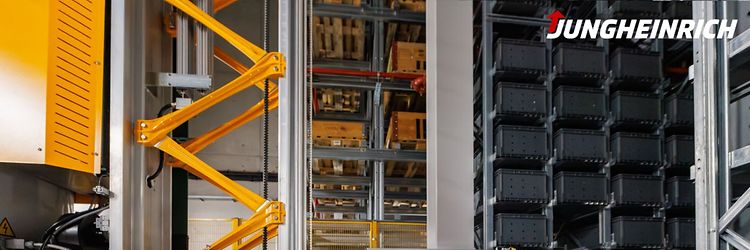
What Pain Points in Traditional Warehouses Cause Businesses to Lose Revenue?
- Rising Labor Costs – Heavy reliance on manual labor for moving and storing goods creates high fixed expenses and potential risks of labor shortages.
- Delayed Operational Efficiency – Manual searching and picking process is often time-consuming, making it difficult to fulfill rapidly growing order volumes on time.
- Low Stock Management Accuracy – Manual data entry and inventory counting frequently lead to errors, resulting in lost items or misplaced stock.
- Operational Risks – Requiring employees to work at height or repeatedly lift heavy objects increases the likelihood of workplace accidents.
- Inefficient Space Utilization – Traditional warehouses often face limitations in vertical storage, leading to wasted space and potential investments in additional warehouse expansion.
How Many Types of AS/RS Systems Are There, and What Operational Needs Do They Serve?
Selecting an AS/RS system involves various configurations depending on product size, retrieval volume, and warehouse space constraints. The primary types can be categorized by their operational functions as follows:
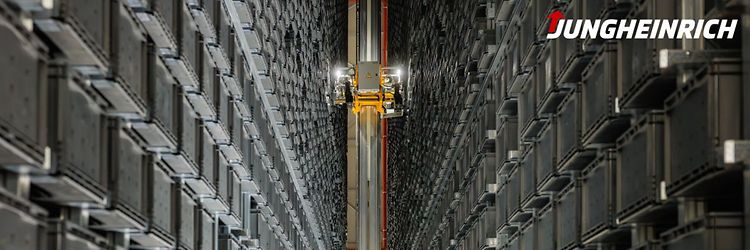
When Should Your Warehouse Switch to an AS/RS System?
Businesses should consider transitioning to an AS/RS system when order volumes grow to a point where traditional management causes delays, or when rising labor costs and storage space constraints begin to hinder business expansion. Additionally, if your warehouse suffers from inventory discrepancies, frequent shipping errors, or requires faster distribution to maintain a competitive edge, these are clear signs that automation technology is ready to play a critical role in your operations.
What Are the Business Benefits of an AS/RS System?
- Maximized Storage Space Utilization – Increases warehouse storage capacity through vertical space utilization, reducing the need to rent or build additional space.
- Controlled and Reduced Labor Costs – Decreases reliance on manual labor for repetitive processes, delivering long-term operational cost savings.
- Enhanced Speed and Accuracy – Operates seamlessly with management software for precise item retrieval, picking, and order preparation, significantly reducing order fulfillment errors.
- Real-Time Data Updates – Instantly tracks inventory levels and movement status, enabling more efficient business planning and forecasting.
- Inventory Protection and Damage Reduction – Minimizes product damage caused by manual handling while systematically supporting First-In, First-Out (FIFO) inventory control.
Expert AS/RS and Warehouse Management Services
Transitioning a warehouse to automation requires specialists to consult, design, and install systems tailored to your specific business requirements. Jungheinrich offers comprehensive, end-to-end AS/RS solutions—ranging from warehouse structure analysis and budget-aligned equipment selection to preventive maintenance to ensure seamless, continuous operations. In addition to automated solutions, we provide comprehensive supporting warehouse services, such as flexible daily and monthly forklift rental plans to accommodate peak-demand periods. Our expert team is ready to support your business every step of the way to drive sustainable growth.
Looking for the right solution for your business?
Get personalized offers and tailored solutions for your business.

Contact Us
Sale Department
Phone
The AS/RS system transforms traditional warehouse management into a high-efficiency automated operation—effectively resolving delays, minimizing errors, and intelligently maximizing storage capacity. Investing in this technology not only lowers long-term operational costs but also positions your business for future growth, enabling seamless adaptation to fast-paced consumer demands.