
Organize Your Stock: Quick Retrieval, No Deadstock
Efficient warehousing starts with smart planning. Disorganized systems lead to high costs and damaged goods. Jungheinrich dives into inventory techniques to simplify your workflow and introduces storage layouts that maximize your space for peak efficiency.
What is Warehouse Storage?
Warehouse storage is the systematic organization of goods and raw materials within a facility to maintain product integrity and ensure delivery readiness. By implementing structured placement based on product type and characteristics, businesses enable staff to access, move, and audit stock rapidly. This efficiency is the cornerstone of a seamless logistics supply chain.
Why Inventory is the Heart of Your Business
Inventory serves as a liquid asset that dictates a company’s operational agility. Maintaining optimal stock levels ensures high service levels and prevents lost sales opportunities. Conversely, poor inventory management can lead to "dead stock," tying up essential working capital unnecessarily. Effective inventory control is, therefore, the primary factor in balancing operational costs with profitability.
How Systematic Storage Elevates Your Business
A well-defined warehouse management system does more than just organize a space; it drives business growth through several key advantages:
- Boosted Operational Speed: Precision in stock placement minimizes picking time, allowing staff to locate and retrieve items with maximum accuracy.
- Reduced Product Loss & Damage: Proper storage solutions prevent deterioration caused by overcrowding or unsuitable environmental conditions.
- Enhanced Inventory Accuracy: Reliable data enables data-driven procurement planning, reducing the risk of overstocking or stockouts.
- Optimized Space Utilization: Strategic layouts increase storage density, allowing you to handle more volume within your existing footprint without the need for costly building expansions.

6 Internationally Recognized Warehouse Storage Methods
Selecting the right Stock Location Assignment strategy tailored to your product characteristics is vital for optimizing warehouse workflow and throughput. The following six standard methods are widely utilized across the global logistics sector:
1. Fixed Location Storage
This method assigns a designated, permanent slot for each individual SKU (Stock Keeping Unit). Because locations remain constant, warehouse operators develop high familiarity, leading to rapid order picking. This strategy is ideal for facilities with a stable, limited range of products and consistent inventory volumes.
2. Non-Fixed (Dynamic) Location Storage
A highly flexible system where incoming goods are allocated to any currently available, optimal empty slot. This maximizes warehouse space utilization and storage density. It is highly suited for dynamic businesses handling diverse product dimensions and fluctuating inventory turnover.
3. Informal Storage
An unstructured approach where goods are placed based on immediate, manual decisions regarding available space, rather than systemic rules. While common in small-scale retail operations or domestic storage where inventory can be easily managed by sight, it is rarely used in automated industrial environments.
4. Item Number Sequencing
This strategy organizes goods numerically or alphabetically according to their part numbers or product codes. Aligning physical placement with inventory records simplifies stock auditing and prevents pickers from confusing visually identical items. It works best for operations with predictable, steady inbound and outbound flows.
5. Classified (Zone) Storage
Goods are grouped and stored in dedicated zones based on product categories, characteristics, or specific handling requirements (e.g., separating electronics, garments, or perishables). This streamlines category management and allows for precise environmental control (such as temperature or humidity) tailored to each product type.
6. Combination Storage System
This hybrid approach integrates the strengths of multiple methods to handle high complexity. For instance, a facility might apply a Fixed Location strategy for high-velocity, fast-moving consumer goods (FMCG) to ensure instant access, while utilizing a Dynamic Location setup for slower-moving items. This is the preferred solution for large-scale, high-density distribution centers.
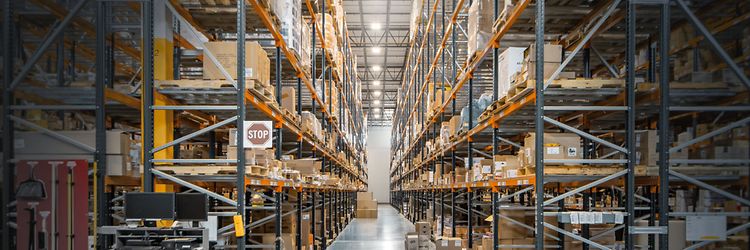
How to Optimize Warehouse Management: Saving Time and Reducing Waste
To establish standardized storage and minimize operational errors, Jungheinrich recommends implementing these immediate best practices:
- Identification & Categorization: Apply clear labeling, product codes, or Barcodes during the Receiving stage to ensure seamless end-to-end traceability.
- Strategic Layout Planning: Segment your warehouse into dedicated zones for receiving, storage, and dispatch. A logical Warehouse Layout minimizes travel distances and handling time.
- Inventory Rotation Systems: Implement FIFO (First-In, First-Out) principles to ensure older stock is dispatched first, preventing product obsolescence and deterioration.
- Regular Stock Audits: Conduct frequent Cycle Counting to reconcile physical stock with digital records. This continuous monitoring significantly reduces inventory shrinkage and discrepancies.
Which Equipment and Systems Best Serve the Industry?
Selecting high-durability, standardized Industrial Racking is essential for safely supporting vertical loads. Furthermore, pairing the right Forklift (specifically sized for your aisle widths) with a robust Warehouse Management System (WMS) enhances location accuracy, mitigates workplace accidents, and ensures fluid stock movement.
Your Partner in Intralogistics Excellence
Systematic warehouse management is the bedrock of business success. Whether you are refining your storage strategy or selecting world-class equipment, Jungheinrich is your dedicated intralogistics partner.
We offer comprehensive solutions, including high-performance forklift rentals and certified refurbished used forklifts that meet our rigorous quality standards. Our goal is to ensure your warehouse operations run at peak efficiency. Contact our experts today to find the customized solution that best fits your business needs.