
Jungheinrich Pallet Truck Selection Guide
The Pallet Truck has become an essential tool for boosting operational efficiency. It significantly reduces manual labor and minimizes task cycle times. This article provides a complete, one-stop guide on how to select the perfect pallet truck tailored specifically to your business needs
Which Jungheinrich Pallet Truck is right for your operation?"
"Selecting the ideal Jungheinrich Pallet Truck doesn't start with 'picking a model'—it begins with a deep understanding of your specific operational needs, such as travel distance, load weight, available space, and usage frequency.
This guide is designed to simplify your decision-making process and help you find the most efficient solution for your facility.
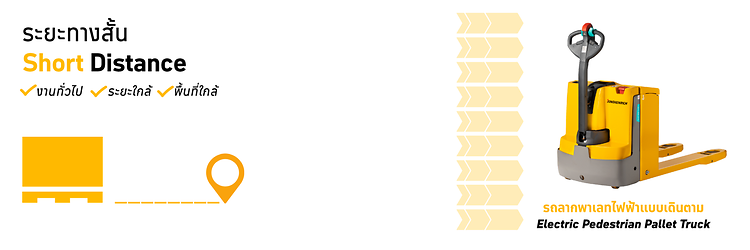
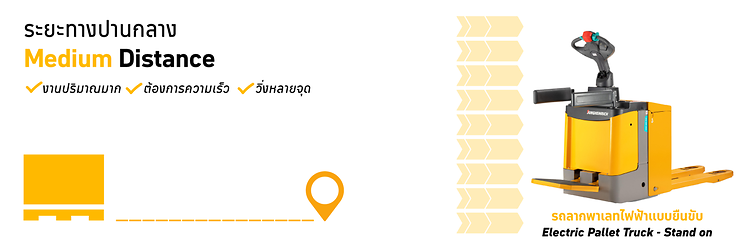
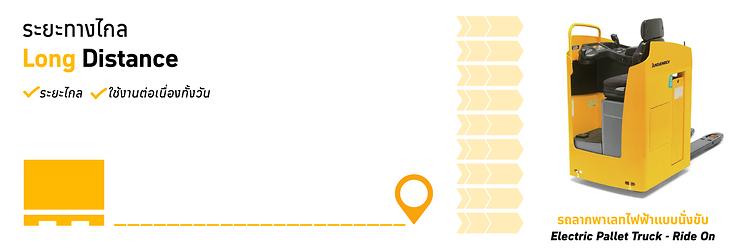
The core criteria for your selection are 'travel distance' and 'usage frequency'.
The table below provides a clear comparison of each type, helping you identify the most suitable solution to optimize your business operations.
Comparison: Electric Pallet Truck Types (Pedestrian vs. Ride-on vs. Sit-on)
Comparison Criteria | Pedestrian (Walkie) | Ride-on (Platform) | Sit-on |
Jungheinrich Series | EJE / EJE M | ERE | ESE |
Travel Distance | Short distances (< 30m) | Medium to long (30–100m+) | Long distances (> 100m) |
Travel Speed | Walking speed | Medium to High | Maximum Speed |
Usage Intensity | Occasional / Light-duty | Heavy-duty / Multi-shift | Intensive / High throughput |
Operating Space | Very confined / On-truck | Medium-sized warehouses | Large hubs / Long aisles |
Operator Fatigue | High (Walking required) | Low (Foldable platform) | Lowest (Maximum comfort) |
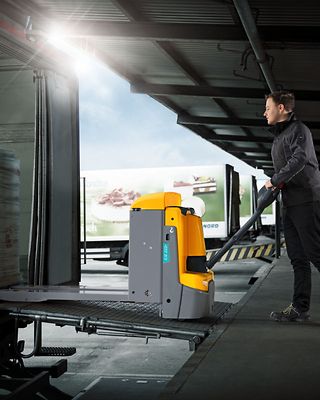
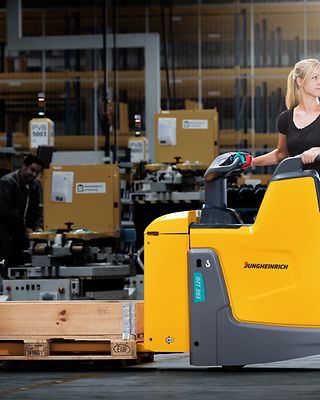
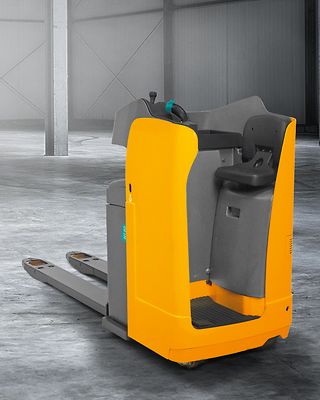
Compact and user-friendly, the Electric Stacker is a popular choice for businesses looking to enhance storage efficiency without the high investment required for a full-scale forklift.
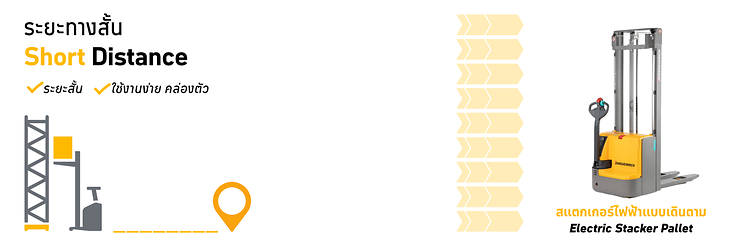
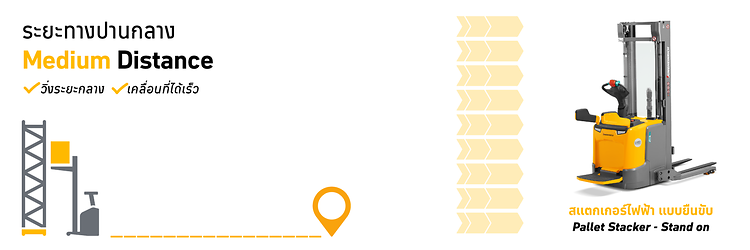
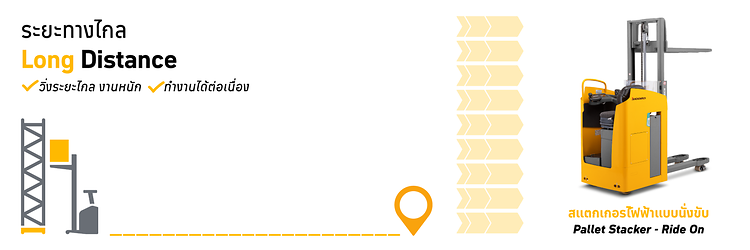
Comparison: Electric Stacker Types (Pedestrian vs. Ride-on vs. Sit-on)
Comparison Criteria | Pedestrian (Walkie) | Ride-on (Platform) | Sit-on |
Jungheinrich Series | EJC / EJC M | ERC | ESC |
Travel Distance | Short (< 30m) | Medium to Long (30–100m) | Very Long (> 100m) |
Stacking Height | Low to Medium | Medium to High | High (Heavy-duty) |
Travel Speed | Walking Speed (approx. 6 km/h) | High (up to 9 km/h) | Maximum (High Performance) |
Visibility | Moderate | Good (Side-on stance) | Excellent (Ergonomic seat) |
Ideal For | Tight aisles & small shops | High-throughput logistics | Cross-docking & large hubs |
Operator Comfort | Moderate (Constant walking) | High (Foldable platform) | Maximum (Lowe |
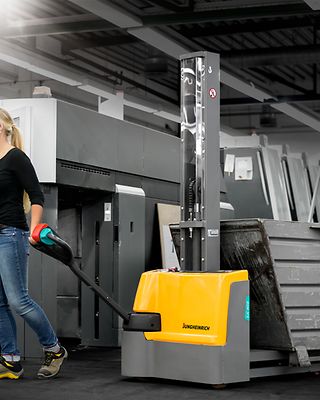
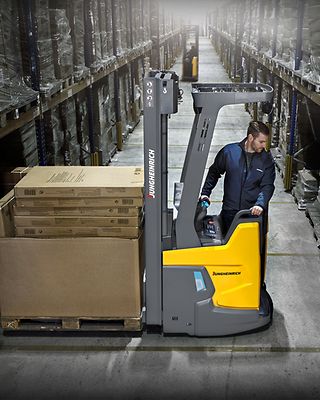
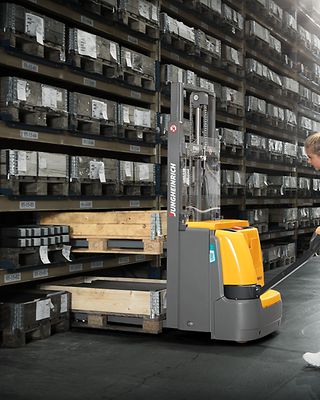
Key Selection Criteria: Electric Pallet Trucks vs. Electric Stackers
The choice between an Electric Pallet Truck and an Electric Stacker should primarily be driven by your specific operational tasks. If your focus is on horizontal transport, a pallet truck is the ideal choice. However, if your operations require vertical stacking onto racking systems, a stacker is essential.
Critical factors to consider include load capacity, lift height, aisle width, travel distance, and usage frequency. These metrics will determine the most efficient configuration for your business—whether it be pedestrian, ride-on platform, or sit-on models. Furthermore, you must select a battery type that matches your shift intensity, ensure floor conditions and pallet sizes are compatible with the machine, and evaluate the Total Cost of Ownership (TCO). Prioritizing safety features and reliable after-sales service will ensure your equipment operates at peak efficiency, provides long-term value, and minimizes operational risks in your warehouse.

Information Contact
About Products
Phone