At this point we would like to offer you the possibility to get in touch with us via chat. Due to your current cookie preferences, we cannot show the chat yet.
Please accept our “Preferences” cookies to activate the chat function.
What is Human Error? Unlocking the Hidden Costs of Small Mistakes in B2B Operations
In B2B operations, minor daily workflow errors can cause millions in damage. Whether picking wrong items, misentering data, or clicking suspicious links, human actions drive these costly breakdowns.
In this article, Jungheinrich will take an in-depth look at the root causes of Human Error, why it has become a hidden cost eating away at business profits, and how modern organizations can build systems to prevent personal mistakes from hindering long-term growth.
What is Human Error?
Human Error refers to unintentional mistakes made by individuals during operational activities. It does not stem from malice or deliberate intent, but rather from momentary lapses in focus, oversight, or misjudgment. Common triggers include physical fatigue, time pressure, a lack of process understanding, or sheer complacency. These mistakes can occur at every level of an organization—from warehouse floor operators to senior executives.
Why Does Human Error Matter in the B2B World?
In the highly competitive and precision-driven B2B landscape, every operational step is interconnected. According to H.W. Heinrich’s industrial safety research, over 88% of workplace accidents and operational failures stem from human causes rather than mechanical faults. This highlights how human fallibility directly impacts organizational reliability. Allowing recurring errors unaddressed risks eroding partner trust, disrupting commercial contracts, and damaging brand reputation over time.
Why Human Error Becomes a Hidden Cost Draining Millions from B2B Businesses
A mistake that seems trivial today can easily escalate into a major vulnerability, causing massive financial losses for B2B enterprises. The core impacts can be categorized into three key areas:
1. Delays in Customer Service and Deal Closures
When human slips occur during document preparation or when incorrect commercial terms are communicated, workflows grind to a halt for corrective action. This delay not only inflates operational time costs but also opens the door for competitors to step in and win over your clients—resulting in a direct loss of high-value business opportunities.
2. Data Inaccuracies in Operational Systems and Inventory Management
Workflows that rely heavily on manual data entry or human stock counting often lead to discrepancies between system data and actual inventory. For instance, incorrect logging of stock locations across pallet racking systems causes employees to waste time searching for items. This eventually leads to shipping delays and inventory stockouts, adding substantial hidden operational costs to warehouse management.
3. Cybersecurity Vulnerabilities and Data Leaks
In the digital era, data is the most valuable asset for B2B enterprises. However, an employee's lack of security awareness—such as using weak passwords, falling for phishing emails, or sharing sensitive partner data via insecure channels—represents a critical Human Error. These oversights expose systems to cyberattacks, where remediation costs and legal penalties can easily reach tens of millions of baht.
Why Staff Errors Should Be Solved with Systems, Not Personal Blame
When employees make mistakes (Staff Error), the default response for many organizations is to reprimand or penalize the individual. However, from a systems management perspective, employees are simply operating within an established workflow. When a single human error can trigger severe operational or financial damage, it reveals a fundamental truth: the system itself lacks proper design controls.
Professional organizations always operate on the assumption that humans will inevitably make mistakes. Rather than expecting flawless, error-free performance from staff, the focus must shift toward building robust Error Prevention mechanisms and effective Error Recovery workflows to safeguard operations.
Strategies to Reduce Human Error and Elevate Organizational Efficiency
While eliminating human error entirely may be unrealistic, mitigating risk and containing its potential impact is well within every organization's reach through the following actionable strategies:
1. Implementing Automation and Smart Warehouse Technologies
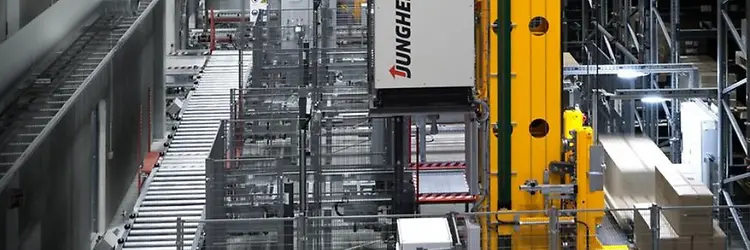
Eliminating manual intervention in repetitive, labor-intensive tasks is the most sustainable solution for error reduction. Transitioning toward a Smart Factory using a Warehouse Management System (WMS) ensures precise, real-time data logging and stock tracking. Furthermore, deploying Automated Guided Vehicles (AGVs) for material handling removes the risk of human driving accidents, enabling smooth, uninterrupted 24/7 operations.
2. Implementing Access Control and Multi-Tier Approval (Least Privilege & Double Approval)
Designing robust workflow systems by enforcing the principle of Least Privilege—restricting data access strictly to authorized personnel—and mandating Double Approval for high-value transactions or inventory releases significantly reduces the risk of single-person errors and prevents operational damage from escalating.
3. Fostering Organizational Culture and Continuous Staff Training
Eliminating errors caused by a lack of awareness requires ongoing employee training—covering standardized operational procedures as well as safety protocols. Equally critical is establishing an organizational culture where staff feel empowered to report mistakes or potential operational risks transparently, without fear of unreasonable retribution. This psychological safety allows businesses to gather crucial operational insights to refine and strengthen their systems continuously.
Elevate Warehouse Management and Eliminate Errors with Jungheinrich Solutions
If your warehouse operations are struggling with delays, inventory discrepancies, or human-caused accidents, Jungheinrich—as a leading intralogistics specialist—is ready to partner with you to transform your workflows. We offer comprehensive, end-to-end warehouse solutions ranging from automated system integration and high-performance electric forklifts to flexible forklift rental programs tailored for businesses of all sizes. Transform your conventional warehouse into a precision-driven facility, reduce employee strain, and eliminate human error from your growth equation.
Looking for the right solution for your business?
Get personalized offers and tailored solutions for your business.
What is the difference between Human Error and System Error?
Human Error refers to unintentional mistakes caused by human actions, decisions, or momentary lapses in focus (such as entering wrong digits or missing a document check). System Error, on the other hand, refers to technical or mechanical breakdowns originating from software, hardware, or equipment failures (such as server crashes or machine halts caused by faulty components).
How can you evaluate whether an organization or warehouse is facing a critical level of Human Error?
Critical human error levels can be identified through key operational metrics, such as frequent inventory discrepancies, rising order fulfillment error rates, repeated customer complaints regarding service delays, or a high recurrence of minor near-miss safety incidents. Discovering these warning signs indicates fundamental gaps in workflow systems that require immediate mitigation.
How does an Automated Storage and Retrieval System (ASRS) reduce Human Error in logistics operations?
An ASRS utilizes computerized control software and automated robotics to store and retrieve inventory with high precision. By eliminating the need for operators to manually search for items or manually log shelf locations, it directly eradicates common operational mistakes such as mispicking, misplacement, and inventory loss.