At this point we would like to offer you the possibility to get in touch with us via chat. Due to your current cookie preferences, we cannot show the chat yet.
Please accept our “Preferences” cookies to activate the chat function.
Electric Forklift Rental: Short-Term, Long-Term, vs. Fleet Rental – What is the Difference?
Electric forklift rental optimizes warehouse efficiency, controls budgets, and cuts CapEx. Choosing the right short-term, long-term, or fleet model depends on your operational workflows, continuity needs, and business cost structure.
This article provides key insights to help warehouses evaluate and select the most appropriate rental model for their business.
Short-Term Electric Forklift Rental
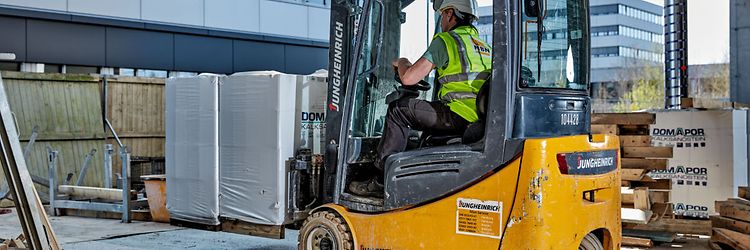
Short-term electric forklift rental refers to flexible rental agreements ranging from daily, weekly, to monthly plans, typically not exceeding 1 year. With zero long-term commitment, this model is ideal for warehouses looking to scale operational capacity during specific windows or respond to unpredictable supply chain demands.
Ultimately, this rental approach serves as an agile tool for operational flexibility rather than a primary, long-term warehouse solution.
Ideal Applications for Short-Term Forklift Rental
Temporary & Project-Based Workloads
Backup During Maintenance Downtime
Peak Season Demand Spikes
Pre-Purchase & Long-Term Trialing
The Role of Short-Term Electric Forklift Rental
1. Managing Workload Fluctuations & Peak Seasons
Warehousing and manufacturing businesses frequently face unpredictable order volumes and seasonal surges. Short-term forklift rental allows organizations to instantly scale up their material handling capacity without committing to heavy, permanent capital expenditures (CapEx).
2. Minimizing Costly Maintenance Downtime
When a primary forklift breaks down, operational delays can severely impact your bottom line. Securing a short-term electric forklift rental acts as an immediate backup solution—ensuring workflow continuity, preventing delivery delays, and eliminating the hidden costs of idle warehouse labor.
Special projects such as facility relocation, seasonal warehouse setups, or short-term event logistics often require extra lifting power for a limited time. Short-term rentals provide a highly cost-effective option, giving you the exact equipment needed only for the duration of the project.
4. Testing New Technology Before Capital Commitment
Before making a long-term investment, organizations can utilize short-term rentals to evaluate the performance of advanced lithium-ion battery electric forklifts or specialized attachments. This serves as a real-world trial to ensure the technology fits your operational environment before committing to a long-term lease or fleet upgrade.
Key Factors to Consider Before Choosing Short-Term Forklift Rental
1. Actual Usage Duration & Timeline
It is crucial to accurately evaluate whether your operational need is strictly temporary or likely to extend. Identifying your exact timeline prevents the accumulation of short-term rental costs, which can become higher than long-term alternatives over time.
2. Equipment Availability & Specifications
Since short-term rentals rely heavily on the provider’s immediate inventory, last-minute requests may limit your options. Planning ahead ensures you secure an electric forklift with the precise load capacity, lift height, and battery specifications required for your specific application.
3. Service Terms & Technical Support
To mitigate operational risks, closely review the provider's service level agreements (SLAs). Key aspects to consider include maintenance coverage, the availability of backup replacement units, and emergency response times in the event of a breakdown.
4. Rental Frequency & Long-Term Trends
If your business finds itself repeatedly securing short-term rentals, it is a strong indicator that your operational demands have stabilized. In this scenario, transitioning to a long-term electric forklift lease or a fleet rental solution will offer better cost-efficiency and budget predictability.
Financial Impact: CapEx to OpEx Flexibility
Short-term electric forklift rental enables businesses to maximize capital efficiency by converting heavy upfront costs into a flexible, pay-per-use operational expense (OpEx). This strategic shift eliminates large capital expenditures (CapEx), avoids the hidden costs of underutilized machinery, and preserves cash flow fluidity before committing to a permanent fleet expansion.
However, keep in mind that if continuous usage extends past initial estimates, the cumulative total cost of short-term rentals can outpace the cost-efficiency of a long-term lease.
Long-Term Electric Forklift Rental
What is Long-Term Electric Forklift Rental?
Long-term electric forklift rental (or long-term leasing) refers to rental agreements with a contract duration of 1 year or more (typically exceeding 12 months). This model is highly suitable for businesses with continuous daily operations that require long-term, predictable cost control. By selecting a long-term plan, organizations can streamline budget planning and manage monthly cash flow fluidly.
Comprehensive Maintenance & Support Included
One of the primary benefits of long-term leasing is the inclusion of full-service support, which typically covers:
Preventive Maintenance (PM): Scheduled routine check-ups to keep the trucks running efficiently.
Repairs and General Maintenance: Coverage for wear-and-tear parts to avoid unexpected repair bills.
On-Site Technical Support: Fast expert assistance to minimize unexpected breakdown risks and reduce internal administrative burdens.
Key Considerations Before Committing
While long-term rentals offer significant financial advantages, they come with contractual commitments and generally provide less flexibility for sudden fleet reductions compared to short-term rentals. Therefore, it is essential to thoroughly evaluate your long-term workload continuity and verify exact equipment specifications before signing a contract.
Ideal Applications for Long-Term Forklift Rental
Continuous Warehouse & Factory Operations
Long-Term Budget Planning & Cost Control
Risk Mitigation & Fleet Management Reduction
The Role of Long-Term Electric Forklift Rental
1. Establishing Operational Stability
Having a dedicated, application-specific fleet permanently stationed at your facility ensures continuous material handling processes. Long-term forklift rental guarantees that workflow efficiency remains consistent, eliminating the operational risks of equipment shortages or volatile performance variations.
2. Minimizing Costly Equipment Downtime Risks
Long-term leasing plans routinely incorporate structured Preventive Maintenance (PM) agreements. This proactive servicing model significantly cuts down the likelihood of emergency breakdowns, keeping your operation running smoothly and protecting your bottom line from unexpected disruptions.
3. Optimizing Machine Specifications for Your Workflow
Unlike rigid short-term options, a long-term commitment allows organizations to customize the forklift’s load capacity, lift height, battery systems, and attachments. Tailoring the equipment to fit your precise layout constraints leads to maximum operational throughput and energy efficiency.
4. Reducing Internal Fleet Management Burdens
By offloading all responsibilities for maintenance scheduling, spare parts inventory, and safety compliance inspections to the rental provider, you free up your internal teams. This enables your workforce to redirect their focus entirely toward core business activities and growth.
Key Factors to Consider Before Choosing Long-Term Forklift Rental
1. Workflow Continuity and Demand Stability
Long-term leasing requires a consistent, predictable volume of material handling activities. Ensuring a stable daily workload guarantees that you maximize equipment utilization, locking in the highest possible cost-efficiency over the entire contract duration.
2. Precise Initial Equipment Specifications
Because you are committing to a long-term asset, configuring the correct specifications from the very beginning is critical. Selecting an electric forklift with the exact load capacity, mast lift height, and battery technology tailored to your specific warehouse layout prevents long-term performance bottlenecks.
3. Provider Service Level Agreements (SLAs)
To secure uninterrupted operations, thoroughly evaluate the provider's support terms. Critical factors to review include their emergency technical response times, the guaranteed availability of backup replacement forklifts, and the comprehensive scope of their preventive maintenance plans.
4. Contract Flexibility and Scalability
Business environments can change rapidly over a 1 to 5-year period. It is wise to review the contract’s flexibility regarding fleet scaling—specifically whether the provider allows you to adjust the total number of units or upgrade machine specifications if your operational demands shift.
If you don't want to purchase a truck, but more concerned about its intralogistics benefits, then our long-term rental models are the perfect solution for you.
Long-term electric forklift rental plays a vital role in corporate budget planning and cost management. By shifting from capital expenditure (CapEx) to fixed operational expenditure (OpEx), businesses can effectively preserve cash flow fluidity and reallocate critical capital toward revenue-generating activities or expansion plans.
Furthermore, predictable monthly rates streamline overall operational cost calculations, while comprehensive maintenance inclusion mitigates the risk of volatile, unexpected repair bills.
However, organizations must carefully gauge long-term contractual obligations against expected workload continuity to ensure the Total Cost of Ownership (TCO) yields maximum value throughout the lease term.
What is Forklift Fleet Rental and Fleet Management?
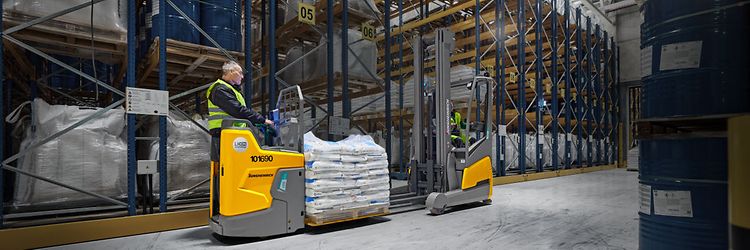
Forklift fleet rental (often integrated with centralized Fleet Management Services) is a comprehensive rental model designed for organizations requiring multiple units of material handling equipment. Typically secured under long-term agreements, this solution blends structured equipment supply with data-driven support services, including preventive maintenance, real-time fleet utilization tracking, and agile scaling capabilities to align with shifting operational demands.
Rather than a simple machinery lease, this model serves as a total material handling resource solution. It enables enterprises to maximize equipment uptime, eliminate hidden operational overheads, and completely remove the internal complexities of self-managing a large industrial fleet.
Ideal Applications for Forklift Fleet Rental Solutions
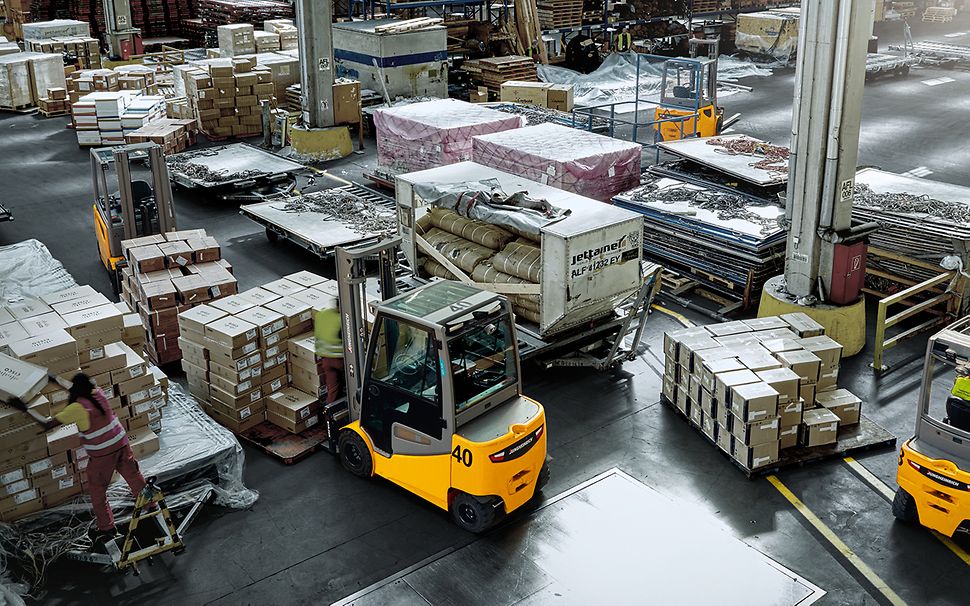
High-Volume & Continuous Multi-Shift Operations
Downtime Control & Productivity Focus
Streamlined Management & Resource Allocation
Agile Scaling for Fluctuating & Expanding Workflows
Total Cost of Ownership (TCO) Optimization
The Strategic Role of Fleet Rental in Logistics Operations
Centrally managing your equipment through a fleet model allows your organization to align the exact number, type, and lift capacity of your machines with actual daily workloads. This data-driven approach eliminates the hidden costs of idle surplus equipment while preventing sudden forklift shortages.
2. Adapting Seamlessly to Volatile Workloads
A forklift fleet rental solution provides the agility needed to scale your fleet size up or down, or even swap machine types as your operational demands shift. This allows your business to respond instantly to market changes without making heavy investments in permanent, non-liquid fixed assets.
3. Streamlining Fleet Administration and Operations
Consolidating equipment acquisition, scheduled maintenance agreements, and technical support under a single contract heavily reduces administrative friction. This centralized approach alleviates the workload of your internal procurement and maintenance teams, freeing them to focus on core operations.
4. Securing Uninterrupted Workflow Continuity
Fleet rental models are engineered to protect your bottom line by integrating proactive Preventive Maintenance (PM), real-time machine health monitoring, and a guaranteed supply of backup replacement units. Together, these safeguards mitigate unexpected breakdown risks and keep costly operational downtime to an absolute minimum.
Key Factors to Consider Before Choosing a Forklift Fleet Rental Solution
A fleet rental model delivers the highest return on investment (ROI) for organizations managing a large volume of material handling equipment. If your facility operates multiple units, utilizes a mix of different forklift types, or runs across various logistics hubs, a centralized fleet solution is essential.
2. Downtime Costs & Productivity Goals
For fast-paced environments where operational disruptions lead to severe financial losses, choosing a fleet model is a major advantage. It ensures your business receives expert, proactive maintenance and rapid support engineered to maximize equipment uptime and hit daily productivity targets.
3. Data Analytics & Fleet Optimization Capabilities
To unlock true cost-efficiency, evaluate whether the provider offers fleet tracking and utilization data analytics. Access to real-time machine telemetry helps your management team accurately evaluate usage patterns, remove underutilized units, and continuously optimize fleet configurations.
4. Provider Flexibility & Scalability Adjustments
Business landscapes shift rapidly, making long-term adaptability crucial. A critical factor to consider is the provider’s agility in allowing you to scale the total fleet size up or down, or swap machine specifications seamlessly as your operational demands evolve.
A forklift fleet rental solution acts as a powerful catalyst for corporate budget planning and cost control. By consolidated scaling from capital expenditure (CapEx) to a predictable, fixed operational expenditure (OpEx) model, enterprises can effectively preserve cash flow liquidity and channel critical funds into revenue-generating business expansions.
Furthermore, centralized invoicing and all-inclusive fleet maintenance heavily streamline operational cost forecasting, while eliminating the volatile financial risks of unexpected, multi-unit breakdown expenses.
However, organizations must strategically gauge long-term fleet utilization data against workflow continuity to ensure the total contract value aligns perfectly with overall business goals.
Comparison Table: Short-Term vs. Long-Term vs. Forklift Fleet Rental
Rental Factor
Short-Term Rental
Long-Term Rental
Forklift Fleet Rental
Contract Duration
1 Day to 1 Year
More than 1 Year
More than 1 Year (Long-term setup)
Fleet Flexibility
High (Easy to scale up/down or terminate)
Moderate (Bound by long-term contract terms)
High (Agile scaling and machine swapping)
Monthly Rental Cost
High
Cost-effective for continuous usage
Highly Cost-Effective across the entire fleet
Best Application
Temporary projects, seasonal spikes, or urgent backups
Routine, daily warehouse & factory operations
Large-scale, complex operations running multiple units
Budget Predictability
Difficult to forecast
High (Fixed monthly rates)
Maximum Predictability with Total Cost Optimization
Conclusion: Choosing the Right Forklift Rental Strategy for Your Business
In summary, short-term, long-term, and fleet forklift rentals each play a distinct role in supporting material handling operations based on unique business demands.
Short-Term Forklift Rental: The ultimate solution for organizations prioritizing maximum agility, enabling them to seamless handle seasonal workload fluctuations, temporary projects, or emergency event logistics.
Long-Term Forklift Rental: The ideal choice for continuous, daily operations focused on locking in predictable monthly costs and minimizing the internal burdens of routine maintenance.
Forklift Fleet Rental & Management: A comprehensive, data-driven strategic approach designed for large-scale operations. It consolidates multiple units under a single contract, combining proactive maintenance with agile scaling to optimize resource efficiency and remove operational friction.
The Hybrid Approach: The Ultimate Fleet Strategy
In modern supply chain management, many leading enterprises adopt a hybrid fleet strategy. By securing their core operational capacity through a stable long-term lease or a fleet rental agreement and layering in short-term rentals to absorb seasonal peak demands, businesses achieve the perfect equilibrium. This tactical mix effectively balances cost-efficiency, operational continuity, and ultimate fleet flexibility.
Frequently Asked Questions About Forklift Rental Services
Should I choose a short-term or long-term forklift rental?
It depends entirely on your operational needs. If your business handles temporary projects, seasonal workflow spikes, or unpredictable volume fluctuations, a short-term forklift rental offers the flexibility you need. However, if your facility runs continuous daily operations and requires fixed, long-term cost control, a long-term forklift lease is far more cost-effective.
How does forklift fleet rental differ from standard long-term rental?
Standard long-term rental focuses on leasing individual material handling units. In contrast, forklift fleet rental (Fleet Management) scales up to manage multiple units across your entire operation under a single, centralized contract. It also integrates advanced support services, fleet utilization tracking, and the agility to scale the fleet size to match changing workloads.
Can I increase or decrease the number of forklifts during the contract period?
Short-term rentals offer the highest flexibility to adjust your truck count immediately. For long-term leases and fleet rental agreements, adjustments depend on the specific terms outlined in your Service Level Agreement (SLA) and the scalability policies of your rental provider.
Is routine maintenance and repair service included in the rental cost?
This varies by package. Long-term rentals and centralized fleet management solutions almost always include comprehensive Preventive Maintenance (PM) and wear-and-tear repairs. Short-term rentals usually cover baseline technical support, but full maintenance coverage may vary or incur additional fees depending on the provider.
What happens if a forklift breaks down? Is a backup replacement unit provided?
Reputable providers always offer technical support and emergency on-site assistance. For long-term and fleet rental contracts, a guaranteed backup replacement forklift is typically included in the package to eliminate operational downtime and protect your workflow continuity.
Is a fleet rental solution suitable for small businesses?
Generally, small businesses with limited inventory movement are better served by single-unit short-term or long-term electric forklift rentals. Forklift fleet rental is specifically engineered for mid-to-large enterprises operating a sizable fleet or managing highly complex logistics operations across multiple zones.
What key factors should I evaluate before signing a forklift rental agreement?
To secure the most cost-efficient solution, you should thoroughly assess your daily workload continuity, precise usage duration, total machine count, exact equipment specifications (load capacity, mast height, battery type), and the full scope of the provider's after-sales support.