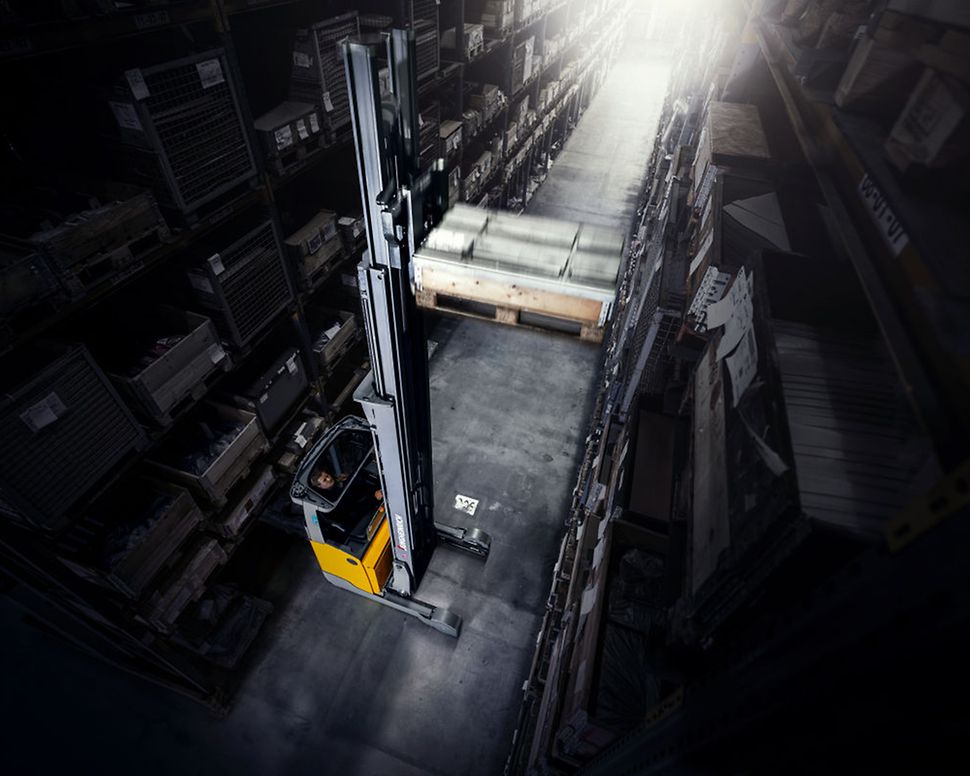
How to Choose the Right Electric Forklift for Your Racking Height: A Guide to Maximizing Warehouse Efficiency
Utilizing vertical space is a proven strategy for reducing overhead costs and maximizing storage capacity. However, there is one critical factor that warehouse operators cannot afford to overlook: racking height.
Racking height directly dictates the essential specifications of your electric forklift. Selecting a forklift type or mast configuration that doesn’t properly match your racking system won't just tank your operational efficiency—it also increases the risk of serious workplace accidents.
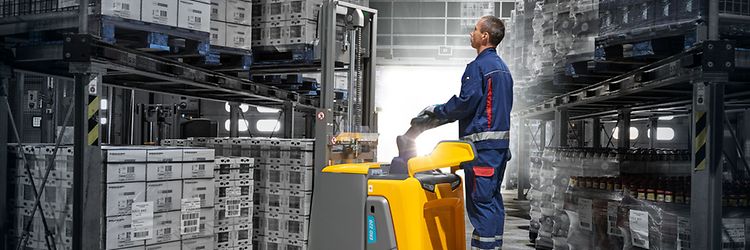
1. Low-Level Racking (Up to 4 Meters): Best for Small Electric Forklifts and Electric Stackers
For small warehouses, cold storage units, or back-of-house storage areas where racking heights do not exceed 4 meters, investing in a standard, heavy-duty forklift is often unnecessary.
The most cost-effective and practical solutions for this setup are Electric Stackers or small electric forklifts designed for maximum agility. These compact machines offer key operational advantages:
- Lightweight Chassis: Reduces the load on warehouse floors, making them ideal for mezzanine levels.
- Tight Turning Radius: Allows operators to navigate narrow aisles and tight spaces with ease.
- Cost Efficiency: Offers a lower total cost of ownership while fully meeting low-height material handling needs.
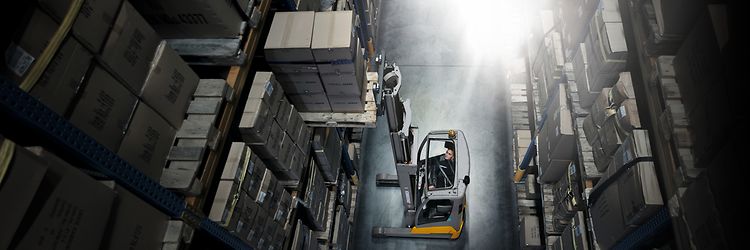
2. Mid-Level Racking (5 to 8 Meters): Best for Electric Reach Trucks (RT)
A racking height of 5 to 8 meters is the industry standard for most distribution centers and manufacturing warehouses. At this elevation, standard forklifts no longer suffice. Safe and efficient material handling requires a Reach Truck or a specialized Narrow Aisle Forklift.
These machines are specifically engineered for mid-to-high level storage with features that optimize both safety and space:
- Pantograph/Reach Mechanism: The forklift can extend its forks forward to pick or place pallets deep within the racking while the heavy chassis remains safely stationary.
- Triplex Mast (3-Stage Mast): Allows the forks to reach high elevations while keeping the collapsed height low enough to clear standard doorways and low ceilings.
- Compact Design: Designed with a slim profile to operate safely and efficiently in tight, narrow aisles, helping you maximize your floor space.
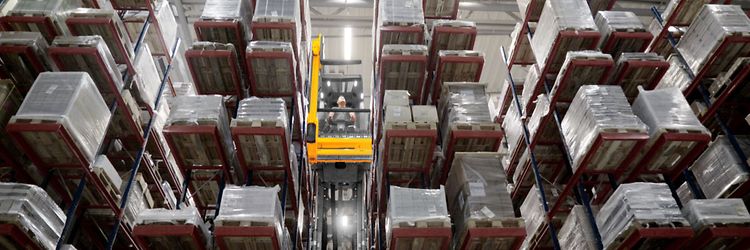
3. High-Level Racking (9 to 13+ Meters): Best for High-Reach Trucks and VNA (Very Narrow Aisle) Trucks
If you operate a high-bay warehouse optimized for vertical density at heights of 9 to 13+ meters, standard equipment is no longer an option. You require specialized, heavy-duty electric forklifts engineered with high-output motors and high-tensile steel chassis, such as High-Reach Trucks or VNA (Very Narrow Aisle) Trucks.
Operating at these extreme heights demands advanced technology to ensure precision and safety:
- Advanced Stability & Mast Control: Equipped with cutting-edge anti-oscillation systems that minimize mast sway at maximum lift heights, ensuring stable and secure load handling.
- Precision Driver Assist Technology: Features like mast cameras, laser height indicators, and pre-set height selectors empower operators to position pallets flawlessly—even at heights where visibility from the ground is severely limited.
- Maximum Space Optimization: VNA trucks operate in ultra-narrow aisles without needing to turn the entire chassis, unlocking the absolute highest storage capacity per square meter.
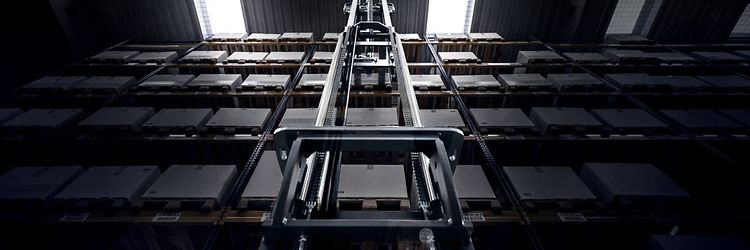
Essential Electric Forklift Mast Specifications: Matching Masts to Your Racks
Choosing the right forklift model is only half the battle. The forklift mast (the vertical assembly that raises and lowers the load) is the true heart of your material handling operations. Selecting the correct mast type is critical whether you are purchasing or renting an electric forklift.
Two-Stage Mast (Duplex Mast)
A two-stage mast is the standard configuration featuring two inner mast sections.
- Best For: Low to medium-level racking systems.
- How it Works: The mast sections extend upward simultaneously as the forks rise.
- Key Benefit: If your warehouse does not have low overhead clearances or ceiling restrictions, a two-stage mast is highly reliable and provides a highly cost-effective solution.
Triplex Mast (Three-Stage Mast with Full Free Lift)
A triplex mast consists of three nested sections that slide out to achieve much higher lift heights while maintaining a low collapsed height (the height of the mast when the forks are fully lowered).
- Best For: Modern warehouses with tall racking systems that also require vehicles to pass through standard-height doorways or work in low-ceiling environments.
- The Power of Full Free Lift: Most high-quality triplex masts feature a Full Free Lift cylinder. This allows the forklift to raise the forks to a certain height without raising the overall mast assembly.
- Container-Friendly: This specific feature makes the triplex mast essential for driving inside shipping containers or low trailers to load and unload cargo safely.
Enhance Safety at Extreme Heights: Fork Camera Systems
As lift heights increase, a driver’s ground-level line of sight naturally decreases. When operating at heights exceeding 6 meters, relying purely on the operator's naked eye can compromise safety.
For high-level racking systems, we highly recommend integrating a Fork Camera System (a camera mounted directly on the fork carriage paired with a high-definition monitor in the driver's cabin).
- Improved Visibility: Provides the operator with a clear, close-up view of the pallet and racking beams on the monitor screen.
- Reduced Product Damage: Eliminates guesswork, allowing the operator to align the forks perfectly with the pallet slots.
- Accident Prevention: Reduces neck strain for the operator and significantly lowers the risk of dropped loads or racking impacts.
Quick Comparison: Choosing the Right Electric Forklift for Your Racking Height
| Feature | Two-Stage (Duplex) Mast | Triplex (Three-Stage) Mast |
|---|---|---|
| Mast Design | Consists of 2 nested mast sections (an outer rail and an inner sliding rail). | Consists of 3 nested mast sections (outer, intermediate, and inner rails) that slide out sequentially. |
| Lift Height | Limited to Moderate (typically up to 3 to 4.5 meters). Ideal for ground-level lifting or low-level storage racking. | High to Very High (commonly reaches 5 to 8+ meters). Designed to maximize vertical warehouse space. |
| Collapsed Height | Tall / High. Because it only has two sections, the mast remains quite tall even when the forks are fully lowered. | Compact / Low. The nested three-section design allows the mast to collapse down significantly shorter when lowered. |
| Full Free Lift | Usually No (or very limited). Raising the forks immediately extends the inner mast upward. | Yes (Standard). Allows the forks to lift to a certain height without raising the overall height of the mast frame. |
| Best Applications | • Outdoor yards and loading docks
• Low-level storage or manufacturing lines
• Where overhead clearance (doors, ceilings) is not restricted | • High-bay warehouses & distribution centers
• Loading and unloading shipping containers or low trailers
• Navigating through standard doorways and low ceilings |
3 Critical Safety Precautions When Operating Electric Forklifts on High-Level Racking
Working at extreme heights always carries inherent risks. To ensure your electric forklift operations run safely alongside your racking systems, here are 3 critical factors you must keep in mind:
1. Understanding Forklift "Residual Capacity" (The Load-De-rating Rule)
Many warehouse operators make the mistake of assuming that a 1.5-ton capacity electric forklift can lift a 1.5-ton pallet all the way up to an 8-meter rack.
In reality, as the mast extends higher, the vehicle's center of gravity shifts forward. The actual weight the forklift can lift safely at maximum height—known as Residual Capacity—decreases significantly.
Example: A forklift rated for 1.5 tons at ground level may only have a safe residual capacity of 1.0 ton when lifting to a height of 8 meters. Always consult your forklift's Load Chart before executing high-level lifts.
2. Matching Aisle Width to Forklift Maneuverability
High-density warehouse layouts often compress aisle widths to maximize vertical storage space. Before purchasing or renting an electric forklift, you must calculate the Right-Angle Stacking Aisle Width (Ast)—which includes the length of the chassis, the forks, and the pallet itself.
Failing to measure the Ast precisely means your forklift might not have enough clearance to turn and maneuver within the aisles, drastically increasing the risk of colliding with the racking structures.
3. Inspecting and Maintaining Racking Structural Integrity
Even the most advanced, safety-equipped electric forklift cannot prevent an accident if your pallet racking system is structurally compromised. Accidental minor impacts from forklifts over time can weaken steel uprights and beams.
In addition to implementing safe forklift driving protocols, warehouses must schedule professional Annual Racking Inspections. This process checks for structural deflections, hairline fractures, or loose anchor bolts caused by daily operations, preventing catastrophic rack collapses.

Information Contact
About Products
Phone