
AI Cameras for Forklifts: A Life-Saving Investment or Just an Unnecessary Expense?
In today's fast-paced logistical landscape, warehouses must operate at peak speed to keep up with demanding supply chain requirements. Amidst this race against the clock, the forklift remains the absolute heartbeat of material handling and cargo movement.
However, beneath the rush of meeting tight deadlines and accelerating throughput, a critical danger always looms in the background: the high risk of workplace accidents.
The Real Cost of Forklift Blind Spots and Human Error
Data from global occupational safety authorities consistently reveals a harsh reality: forklift accidents are among the leading causes of severe workplace injuries worldwide. The vast majority of these incidents stem from three recurring factors:
- Severe Blind Spots: Obstructed views caused by wide mast profiles, large loads, or tight warehouse corners.
- Operator Fatigue: Decreased alertness during long shifts, leading to delayed reaction times.
- Pedestrian Vulnerability: Floor workers unknowingly stepping into danger zones or operating close to moving machinery.
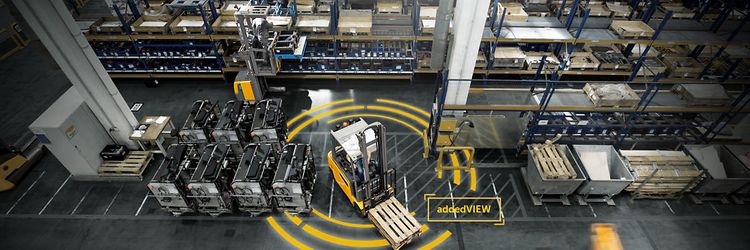
To combat these risks, AI Camera technology was developed to act as an "intelligent set of eyes." Unlike passive systems, these smart cameras provide real-time pedestrian detection and actively analyze behavioral risks on the fly.
However, for executives, factory managers, and warehouse directors, the ultimate pre-investment question remains:
"Is a high-cost AI collision warning system truly worth the Return on Investment (ROI)? Or is it just an expensive tech trend that your budget can do without?"
Head-to-Head Comparison: Traditional Forklift Monitors vs. AI Camera Systems
To clearly evaluate your investment options, it is essential to understand how passive viewing systems compare to active, intelligent detection technology:
| Feature | Traditional Camera & Monitor System | AI-Powered Detection Camera |
|---|---|---|
| Alerting System | No automatic alerts. The operator must continuously look at the screen to spot dangers manually. | Real-time active alerts using audio commands and strobe lights, dynamically zoned by proximity. |
| Operator Cognitive Load | Extremely high. Drivers are forced to split their attention between driving and staring at screens, increasing the risk of Human Error. | Low. Operators can stay 100% focused on driving. The system only broadcasts warnings when an immediate risk is detected. |
| System Intelligence | No object differentiation. The screen shows everything indiscriminately (boxes, racking, walls, and people). | Smart differentiation. Specifically trained to detect the human form, eliminating false alarms triggered by static warehouse objects. |
| Primary Objective | Focused on expanding the driver's field of view and recording video evidence after an incident occurs. | Focused on proactive prevention, actively stopping accidents before they can happen. |
Evaluating the Investment: The Decision-Maker’s Financial Perspective
At first glance, the upfront price tag of an AI Camera System is undeniably higher than that of simple convex safety mirrors or basic reverse sensors. However, forward-thinking executives look beyond the initial invoice—they view this technology through the lens of financial risk mitigation.
Investing in AI safety technology is not just about purchasing hardware; it is about buying insurance against the massive, hidden expenses triggered by a single catastrophic warehouse accident.
Direct Costs vs. Indirect Costs: What a Single Accident Actually Costs Your Business
To truly calculate the ROI of an AI Camera system, we must dissect the financial aftermath of forklift accidents into two main categories:
1. Direct Costs (The Visible Expenses)
These are the immediate, out-of-pocket expenses that hit your balance sheet right after an incident:
2. Indirect Costs (The Hidden Toll)
Often far greater than direct costs, these hidden financial leaks can severely disrupt your business operations:
Conclusion: Is Investing in AI Forklift Cameras Truly Worth It?
Ultimately, equipping your forklift fleet with AI Camera Systems is not an expense spent on a mere hardware accessory. Instead, it represents a fundamental paradigm shift in your warehouse operations: moving from a "Reactive" safety model—where you only implement changes after damage or injury has occurred—to a "Proactive & Predictive" safety ecosystem that actively stops accidents before they ever happen.
When you eliminate the astronomical direct and indirect costs of warehouse collisions, the question changes from "Can we afford to invest in AI safety technology?" to "Can we afford the risk of operating without it?"
"Ready to elevate your safety standards and transform
your facility into a safer, more cost-effective Smart Warehouse?"
Looking for the right solution for your business?
Get personalized offers and tailored solutions for your business.

Contact Us
Sale Department
Phone