
What is Supply Chain Management? Why Enterprises Must Prioritize It?
Driving sustainable business expansion requires a powerful backend engine: a resilient supply chain. Jungheinrich breaks down the mechanics of Supply Chain Management and explores how mastering this framework allows modern enterprises to optimize overhead costs and secure a definitive market edge.
What is a Supply Chain?
Many may wonder what the operational framework of Supply Chain Management (SCM) actually looks like. In reality, a supply chain is an interconnected network of processes extending from upstream to downstream. It encompasses raw material sourcing, manufacturing, warehousing, and product distribution until it reaches the final consumer. When all sectors operate in a seamlessly coordinated system, it ensures a smooth flow of goods and services, allowing businesses to respond to market demands with absolute precision.
The 3 Core Components of Supply Chain Management
To achieve maximum agility and efficiency, Supply Chain Management relies on three primary stakeholder groups:
- Upstream Supply Chain (ต้นน้ำ): This sector focuses on sourcing raw materials. The primary players are Suppliers, who are responsible for delivering production inputs that meet strict quality standards.
- Internal Supply Chain (กลางน้ำ): This refers to internal corporate processes dedicated to transforming inputs (raw materials) into outputs (finished products) through manufacturing workflows controlled by the Manufacturer.
- Downstream Supply Chain (ปลายน้ำ): This process involves transferring finished goods from the warehouse through distribution channels and transportation networks to deliver the products to the end Consumers.
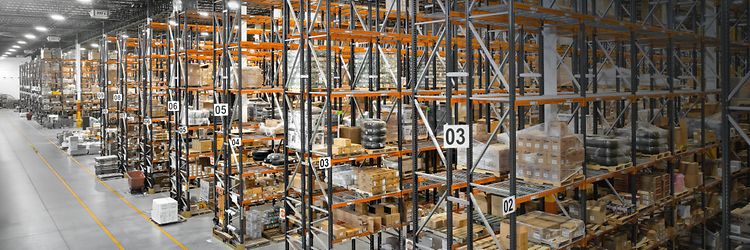
What are the 5 Core Operational Stages of an SCM System?
Systematic supply chain management relies on interconnected and synchronized operational workflows from end to end. This structure is designed to optimize costs and accelerate operational speed, and it is divided into 5 core stages:
How Does Effective Supply Chain Management Boost Market Competitiveness?
The most distinct advantage of robust Supply Chain Management (SCM) is providing organizations with total end-to-end visibility, allowing them to pinpoint bottlenecks and inefficiencies within every process. This clarity enables businesses to eliminate redundant steps, reduce operational costs, and prevent capital from being tied up in excessive inventory. Furthermore, the ability to guarantee on-time delivery while maintaining consistent quality standards builds a professional image of reliability. This serves as a key differentiator, helping to retain your existing client base and attract new customers in an increasingly competitive market.
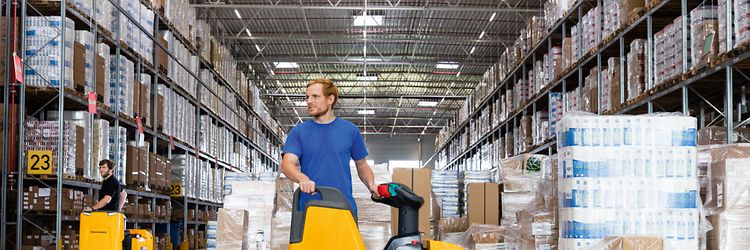
How Cloud and IoT Transform and Optimize Supply Chains
Integrating technologies such as Cloud Computing and the Internet of Things (IoT) enables real-time data connectivity across all sectors of the supply chain. Management can track the status of goods from the factory floor to the end customer, forecast demand using statistical insights, and resolve unforeseen issues instantly. Furthermore, these technologies support sustainability initiatives by calculating energy-efficient transportation routes and delivering concrete reductions in greenhouse gas emissions.
In today's fast-paced business environment, a resilient and adaptable Supply Chain Management system is essential. Enterprises that achieve seamless inventory management and distribution will undoubtedly secure a long-term competitive edge. Jungheinrich is ready to support every aspect of your warehouse operations with our comprehensive intralogistics solutions—from advanced storage system design to flexible forklift rental services tailored to your specific business needs.
Contact our experts today for a consultation on transforming your warehouse into a high-performance operation.