
What is a Smart Factory? Understanding Intelligent Manufacturing: The Key to Business Survival in the Industry 4.0 Era
In today's competitive market, the Smart Factory is key to business transformation. Integrating advanced technology cuts costs and boosts productivity. This article from Jungheinrich explores what a Smart Factory is and why it is essential to your future success.
What is a Smart Factory?
A Smart Factory is the upgrading of manufacturing by integrating digital technologies (IoT, AI, Big Data) with automation systems. This enables machines and various systems to communicate with each other in real-time, driven primarily by data.
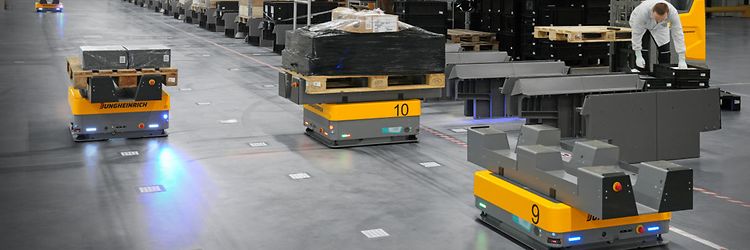
Why Must Modern Industry Transition to a Smart Factory?
- Zero Defects (Error Reduction): Eliminates human error from repetitive tasks through the high precision of advanced technology and machinery.
- Predictive Maintenance (Accurate Analysis & Forecasting): Detects potential machinery failures before they occur by assessing real-time equipment conditions, significantly reducing production downtime.
- Overcoming Labor Shortages: Optimizes workforce requirements while maintaining stable, continuous, 24/7 production capacity.
- Agility (Flexibility & Fast Response): Dynamically adjusts production schedules and logistics in response to real-time changes in customer demand.

Information Contact
About Products
Phone
What are the 4 Core Elements Driving a Smart Factory System?
For a smart factory to operate smoothly and efficiently, it relies on the orchestration of multiple technologies and infrastructural components. The 4 core elements are as follows:
1. IIoT (Industrial Internet of Things) and Sensors
This serves as the foundational system responsible for collecting and transmitting data from machinery and various equipment. It enables administrators to monitor production status and inspect product quality in real-time.
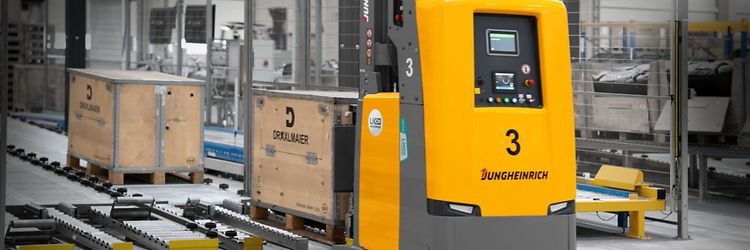
2. Automation & Robotics
The deployment of machinery and robots to handle tasks that involve high risks or repetitive actions. This increases operational speed, ensures consistent quality standards, and enhances safety for factory personnel.
3. Advanced Data Analytics & AI
Processes and analyzes massive volumes of production data (Big Data) to assess situations, forecast potential issues, and provide business owners with precise, actionable insights for strategic decision-making.
4. Software Connectivity & Integration
Implements software systems to manage data centrally, ensuring that every department—from warehousing and production to shipping—shares a single source of truth and operates in a fully synchronized manner.
What is the Difference Between a Traditional Factory and a Smart Factory?
Feature | Traditional Factory | Smart Factory |
Operations & Labor | Labor-Intensive: Relies heavily on human labor for repetitive, manual, or high-risk tasks, increasing the chance of human error. | Automated & Safe: Robots and automated systems handle high-risk and repetitive tasks, optimizing workforce efficiency 24/7. |
Quality Control | Post-Production Inspection: Defects are usually detected through sampling checks after the production process is finished. | n-Line, Real-Time Quality Control: Automated sensors monitor product quality continuously at every step, working toward zero defects. |
Flexibility (Agility) | Rigid: Changing production lines or logistics plans requires significant time, manual reconfiguration, and paperwork. | Highly Agile: Production and supply chain schedules adjust dynamically and automatically in response to real-time order changes. |
Data Utilization | Reactive & Siloed: Data is collected manually (paper/spreadsheets), leading to delayed reporting and isolated department data. | Real-Time & Centralized: Data is automatically collected via IIoT, shared instantly across all departments as a single source of truth. |
Transforming Warehouses into Smart Facilities: The Starting Point for a Sustainable Smart Factory
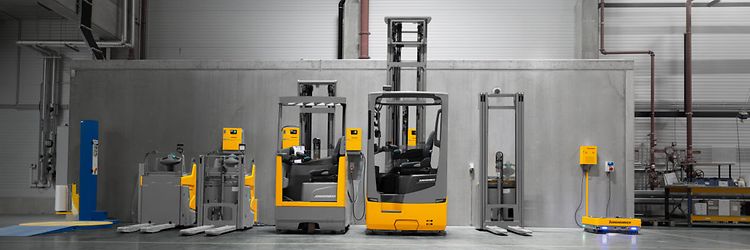
A smart manufacturing process can never be fully complete if its internal logistics (Intralogistics) remain outdated. Implementing automation technologies within the warehouse is therefore a crucial first step to efficiently support the seamless flow of raw materials and finished goods.
- Automated Guided Vehicles (AGVs): Unmanned forklifts that transport components between production stations with high precision, significantly reducing workplace accidents.
- WMS & FMS Software: Warehouse Management Systems (WMS) and Fleet Management Systems (FMS) work together to control product flow and optimize forklift fleet efficiency.
Beyond the technology, designing a cohesive warehouse infrastructure is an essential piece of the puzzle that cannot be overlooked. Whether it is installing heavy-duty industrial racking that meets standard load capacities, utilizing Reach Trucks to maximize vertical storage space, choosing to rent forklifts equipped with modern technology, or even carefully allocating the right forklift to the right application—every detail contributes to a highly systematic workflow.
If you are looking for a way to transition into a full-scale Smart Factory, start by elevating your warehouse operations with Jungheinrich, the leader in automation systems and forklift technology from Germany. We are ready to provide expert consultation and design data-driven solutions tailored to increase your efficiency, reduce operational costs, and drive long-term profitability.
Information Contact
About Products
Phone