
Choosing the Right Tire for Wet Warehouse Surfaces: Maximize Safety, Eliminate Slips
Wet surfaces are a constant operational challenge in industries like F&B manufacturing, cold storage, wet-process warehousing and outdoor loading bays exposed to rain. In these environments, standard tires frequently cause forklift slippage, leading to severe warehouse accidents, damaged inventory.
The Importance of Specialized Tires in Wet and Humid Environments
Moisture and high humidity on facility floors significantly lower the coefficient of friction between the tire and the floor surface. Operating forklifts with improper or excessively worn tires under these conditions triggers hydroplaning. This causes a critical loss of braking control, vehicle fishtailing during steering and wheel slippage, directly impacting productivity and personnel safety.
To ensure continuous grip and prevent sliding, specialized tires are mandatory for wet-floor operations. Upgrading from smooth profiles to treaded tires is vital to effectively evacuate water from beneath the tire. Utilizing specialized high-traction polyurethane or solid rubber cushion tires provides the necessary friction to eliminate slip hazards and secure a safe working environment.
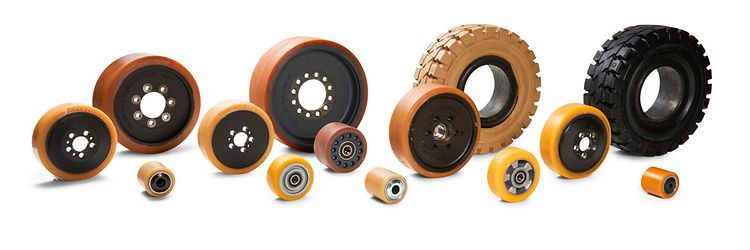
4 Forklift Tire Categories Engineered for Wet Surface Operations
1. Treaded Solid Rubber Tires
These solid tires are engineered with deep, circumferential grooves designed to act as water evacuation channels. When a forklift drives over a wet surface, the vehicle’s weight forces water into the tread grooves rather than allowing it to spread beneath the tire's footprint. This ensures direct contact between the rubber and the polished concrete floor, effectively eliminating wheel spin and preventing side-slips during turns. Furthermore, their solid construction offers exceptional durability, eliminating the risk of punctures from sharp warehouse debris.
- For Hygiene-Critical Environments: For food, beverage, or pharmaceutical facilities with strict cleanliness standards, White Non-Marking Solid Tires are highly recommended. Formulated with a premium silica compound instead of carbon black, they leave zero dark scuff marks or deep-set stains on the floor, even during sudden braking.
2. Deep-Tread Pneumatic (Air-Filled) Tires
Pneumatic tires are highly regarded for their natural flexibility and internal shock absorption. When operating in semi-outdoor loading bays exposed to rain, standing water, or muddy terrain, air-filled tires with extra-deep, block-pattern treads perform best. The aggressive tread blocks slice through water films and thick mud to maintain continuous ground traction, giving operators full control in poor weather conditions. Additionally, their superior dampening properties protect the forklift’s chassis and significantly reduce the risk of product damage when navigating rough, uneven outdoor surfaces.
3. Siped or Grooved Polyurethane Wheels
Electric warehouse equipment—such as reach trucks and electric pallet jacks—typically utilizes smooth polyurethane wheels to maximize load capacity on dry floors. However, when introduced to damp areas, condensation, or cold storage rooms with ice buildup, smooth wheels instantly lose grip due to the micro-layer of water beneath them.
Upgrading to siped or grooved polyurethane wheels directly solves this issue. The fine sipes and grooves disrupt the water surface tension, drawing moisture away from the contact patch and rapidly expelling it as the wheel rotates. This restores critical mechanical friction on polished concrete, allowing electric forklifts to stablely maneuver, turn, and brake safely within narrow racking aisles.
4. Specialized High-Traction / Wet-Grip Tires
This category represents advanced material engineering at the molecular level. Manufacturers blend high-grade silica compounds and specialized polymers with synthetic rubber to create a tire matrix that is uniquely pliable yet exceptionally grippy. This specialized compound achieves a significantly higher coefficient of friction on wet surfaces compared to standard industrial tires. As the forklift navigates high-slip zones, the tire tightly conforms to the microscopic texture of the floor, dramatically shortening braking distances. This makes them the ultimate choice for environments that are continuously wet, such as seafood processing plants or facilities demanding the absolute highest level of workplace safety.

Information Contact
About Products
Phone
Forklift Tire Comparison Table for Wet Environments
Tire Category | Wet-Surface Grip Mechanism | Key Advantages (Pros) | Limitations (Cons) | Best Industrial Applications |
|---|---|---|---|---|
| 1. Treaded Solid Rubber Tires | Deep circumferential grooves channel water outward, ensuring direct rubber-to-floor contact. |
|
| Indoor warehouses, food & pharmaceutical plants (white non-marking variant), and indoor production zones with temporary moisture. |
| 2. Deep-Tread Pneumatic Tires | Aggressive, thick block-pattern treads cut through standing water and heavy mud to bite into the ground. |
|
| Semi-outdoor loading bays, outdoor yards exposed to heavy rain, and rough, unpaved terrains. |
| 3. Siped or Grooved Polyurethane Wheels | Fine micro-slits (sipes) break the surface tension of water films and ice sheets, rapidly expelling moisture. |
|
| Electric reach trucks, powered pallet jacks, cold storage facilities (sub-zero rooms), and areas prone to high condensation. |
| 4. Premium Wet-Grip Compound Tires | Advanced molecular formula utilizing premium silica and polymers creates an incredibly sticky footprint. |
|
| Continuously wet operations, such as seafood processing plants, wet food processing, and high-risk facilities prioritizing zero-accident safety targets. |
CRITICAL PROHIBITIONS: Which Tires Are Strictly Forbidden on Wet Floors?
Summary: How to Choose Forklift Tires for Maximum Safety and ROI in Wet Environments
Selecting the right forklift tires for damp and wet environments does far more than just reduce accidents and maximize personnel safety. It is also a smart financial decision that prevents costly vehicle maintenance, protects warehouse infrastructure, and safeguards your inventory from tip-over and collision damage.
Looking for high-quality forklift tires or expert guidance?
Jungheinrich’s team is ready to help you find the perfect high-traction solution for your specific application. Contact us today for a professional consultation!
Information Contact
About Products
Phone