
How to troubleshoot a forklift that is inoperable.
Many operators face forklift breakdowns during use, which can disrupt daily routines and essential tasks. This article provides practical tips to help you troubleshoot these issues and understand the underlying causes of equipment failure.
Common Causes of Forklift Transmission Issues
When a forklift fails to move forward or backward, even while the engine is running or the electrical system is active, the problem is not limited to mechanical or engine defects. It also involves other factors related to operational usage and environmental conditions.
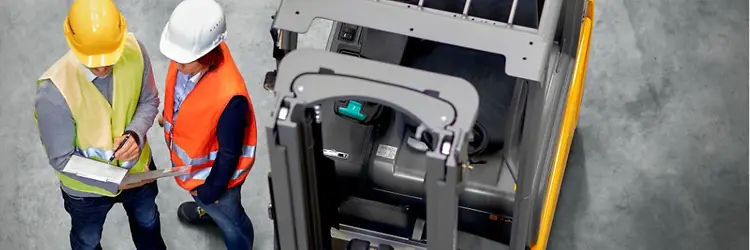
1. Mechanical Failures
The primary cause to consider when a forklift fails to move is the transmission system, which is the heart of the drivetrain. Issues may stem from worn gear teeth, internal component damage, or problems with the Inching Valve—which regulates pressure within the power delivery system. If the valve is clogged or has a broken spring, power transmission will fail. Additionally, a seized braking system, damaged wiring, or blown fuses in electric models are mechanical culprits that can immobilize the vehicle.
As a Jungheinrich forklift expert, we believe that prevention is better than repair. Scheduled Preventive Maintenance (PM) is vital to extending the lifespan of the transmission and other critical mechanical systems, significantly reducing the risk of directional failure.
2. Operator Error
Mistakes made by inexperienced operators or the neglect of basic operating procedures are also major factors. This includes overloading the vehicle, aggressive driving, or ignoring safety manual warnings, all of which lead to cumulative engine and system damage. Furthermore, many modern forklifts feature safety interlocks, such as an accidentally engaged Emergency Stop Switch or Operator Presence Sensing (OPS) systems, which require a specific weight on the seat before the machine can move.
3. Environmental Factors
The working environment can also hinder movement. Operating in debris-heavy areas can lead to foreign objects becoming wedged in the wheels or axles, preventing rotation. Additionally, getting stuck in mud or attempting to navigate uneven surfaces with excessive inclines can prevent the forklift from gaining enough traction to move.
4. Low Transmission Fluid
For internal combustion (IC) forklifts (Diesel or LPG/Gasoline), low or depleted transmission fluid is one of the most common issues. When fluid levels are too low, the system cannot generate enough pressure to engage the transmission, resulting in a loss of movement. If left unaddressed, this can lead to catastrophic gearbox failure.
In contrast, Electric Forklifts do not rely on traditional hydraulic transmission fluid for movement; instead, they use electric motors. If an electric unit fails to move, the issue is typically related to the battery system (e.g., incomplete charging or a degraded battery cell).
Initial Troubleshooting for Forklift Directional Failure
When you find that your forklift cannot move forward or backward, the first step is to park the vehicle in a safe area and perform the following preliminary checks. A thorough self-inspection before calling a technician can help identify basic issues that may be fixable on the spot.
1. Inspect the Braking System
First, verify that the parking brake has been fully released. If it is released but the vehicle still won't move, check for a seized brake. This occurs when a mechanical fault causes the brakes to remain engaged even when the pedal is not depressed. For electric forklifts, check the status of the electromagnetic braking system and any related sensors for error codes.
2. Inspect the Transmission System
Since approximately 70% of directional failures stem from the transmission, your first priority should be checking the transmission fluid level and topping it off as needed.
For electric forklifts, the equivalent check involves inspecting the battery connectors to ensure they aren't loose and verifying that the battery voltage meets standard operating levels. If you hear unusual noises during gear engagement or if the transmission fails to respond entirely, contact a professional technician immediately to prevent further damage.
Summary of troubleshoot a forklift that is inoperable.
Issues with a forklift failing to move forward or backward can stem from a variety of factors—ranging from mechanical faults in the transmission and braking systems to operator error or a lack of regular maintenance. By understanding these causes and following a systematic troubleshooting process, you can often resolve minor issues yourself.
However, if these preliminary steps do not resolve the problem, Jungheinrich recommends contacting a professional technician immediately for a proper diagnosis and repair. Beyond our expert inspection and spare parts services, we offer a comprehensive range of solutions to keep your operations running smoothly. Whether you are looking for high-quality used forklifts, high-efficiency electric forklifts to boost productivity, or flexible short-term and long-term rental options, we are here to ensure your business never stops due to equipment downtime.

Information Contact
About Products
Phone