
Manual guidelines of "How to select the electric forklift for your operation?"
Electric forklifts are the top choice for modern warehousing. Compared to diesel fleets, they eliminate harmful CO2 emissions, minimize noise, and significantly optimize the Total Cost of Ownership (TCO) through reduced maintenance needs.
In real-world operations, electric forklifts come in various tonnage capacities and configurations tailored to specific tasks. This article serves as a Complete Guide to understanding these sizes, configurations, and selection strategies, helping you secure the maximum return on your investment (ROI).
An In-Depth Look at Electric Forklift Weight Capacities
Electric forklift weight capacities in today's market are generally categorized into three major segments based on load characteristics and application requirements:
1. Small-Capacity Forklifts (1.5 – 2.0 Tons) | High Maneuverability for Growing Businesses
- Best Suited For: Indoor warehouses, packaging facilities, retail/wholesale operations, and plants with limited floor space.
- Key Strengths: Compact dimensions, lightweight chassis, and exceptionally tight turning radiuses. They navigate narrow racking aisles seamlessly while maintaining high energy efficiency.
2. Medium-Capacity Forklifts (2.5 – 3.5 Tons) | The Industry Standard for General Manufacturing & Warehousing
- Best Suited For: General manufacturing plants, Fast-Moving Consumer Goods (FMCG) logistics, chemical industries, and hybrid indoor/outdoor loading docks.
- Key Strengths: The most popular size category because it safely handles Thailand’s standard pallet weights. It offers a high safety margin at high lift heights and features a robust structure built for continuous, heavy-duty duty cycles.
3. Large-Capacity Forklifts (5.0 Tons and Beyond) | Engineered for Heavy Industrial Operations
- Best Suited For: Steel processing, heavy mold and die handling, industrial paper rolls, and machinery moving.
- Key Strengths: Equipped with high-output motors and heavy-duty hydraulic systems. They deliver massive torque comparable to traditional diesel engine models while maintaining a strictly zero-emission footprint.
3 Main Categories of Electric Forklifts & Operating Space
When choosing an electric forklift, matching the machine to your aisle width is one of the most critical decisions you will make. It directly impacts your warehouse's storage density and operational safety. Here is the breakdown of the three main categories of electric forklifts based on their operating space requirements, typically measured by the Minimum Aisle Width required for a 90-degree pallet turn.
| Forklift Category | Load Capacity | Ideal Aisle Width (Pallet to Pallet) | Characteristics & Space Impact |
|---|---|---|---|
| 1. Counterbalance Forklifts (3-Wheel or 4-Wheel Electric) | 1.5 - 3.5 tons | 3.5 to 4.2 meters (Wide Aisles) | Requires the most space. Because the battery acts as a counterweight at the back, these trucks have a larger turning radius. They are versatile and fast but inefficient for high-density storage. |
| 2. Reach Trucks | 1.5 - 2.5 tons | 2.7 to 3.2 meters (Narrow Aisles / NA) | Space-saving. The mast extends (reaches) forward to pick pallets, allowing the truck body to stay compact. Moving from a counterbalance to a reach truck can instantly reduce required aisle width by up to 1 meter, freeing up major storage space. |
| 3. Very Narrow Aisle (VNA) Trucks (Man-Up or Turret Trucks) | 1.0 - 4.0 tons | 1.5 to 1.8 meters (Very Narrow Aisles / VNA) | Maximum space optimization. VNA trucks do not turn within the aisle to stack a pallet; instead, only the forks rotate 180 degrees left and right. This allows aisles to be narrowed to just slightly wider than the truck itself, maximizing racking space. |
*Remark: The information on the table is just the standard information that using with 1.2-meter standard pallet.
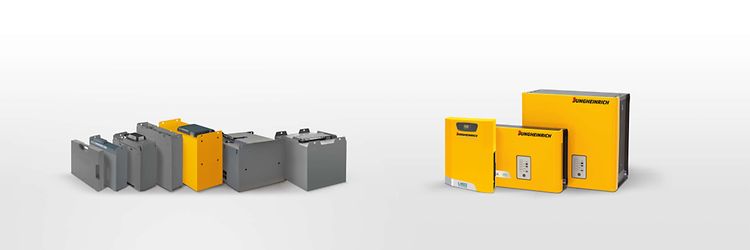
The Core of Electric Forklift Performance: Lead-Acid vs. Lithium-Ion
The ultimate performance and efficiency of an electric forklift depend heavily on its "heart", the battery. Currently, businesses have two primary battery technologies to choose from, each offering distinct operational and financial advantages.
Summary: How to Select the Right Forklift for Your Operation
Choosing the right electric forklift fleet does more than just add value to your bottom line, it creates a cleaner, safer workplace and helps your facility meet warehouse operation standards. In fact, switching from diesel or gas to an electric fleet can reduce your energy consumption by 60% to 70%.
To select the ideal forklift for your specific operation, two critical factors to evaluate are load dimensions and load weight.
Depending on your layout, here are the best fits for your workflow:
- For High Racking & Narrow Aisles: If your warehouse utilizes high-density racking with tight aisle spaces, a Reach Truck is the optimal choice for safe, high-reaching precision.
- For Loading Bays & Dock Operations: If you primarily need to load and unload goods directly from trucks at the bay, a Counterbalance Forklift is the best-suited truck for the job.
Get a Free Consultation from Jungheinrich Experts
If you are considering transitioning your fleet to electric, let’s find the perfect fit together.
Contact our warehouse solutions team today for expert guidance tailored to your business.

Information Contact
About Products
Phone